Gaziantep Urban Design Studio: Convergence
LAUD 301 & 401 Vertical Urban Design Studio
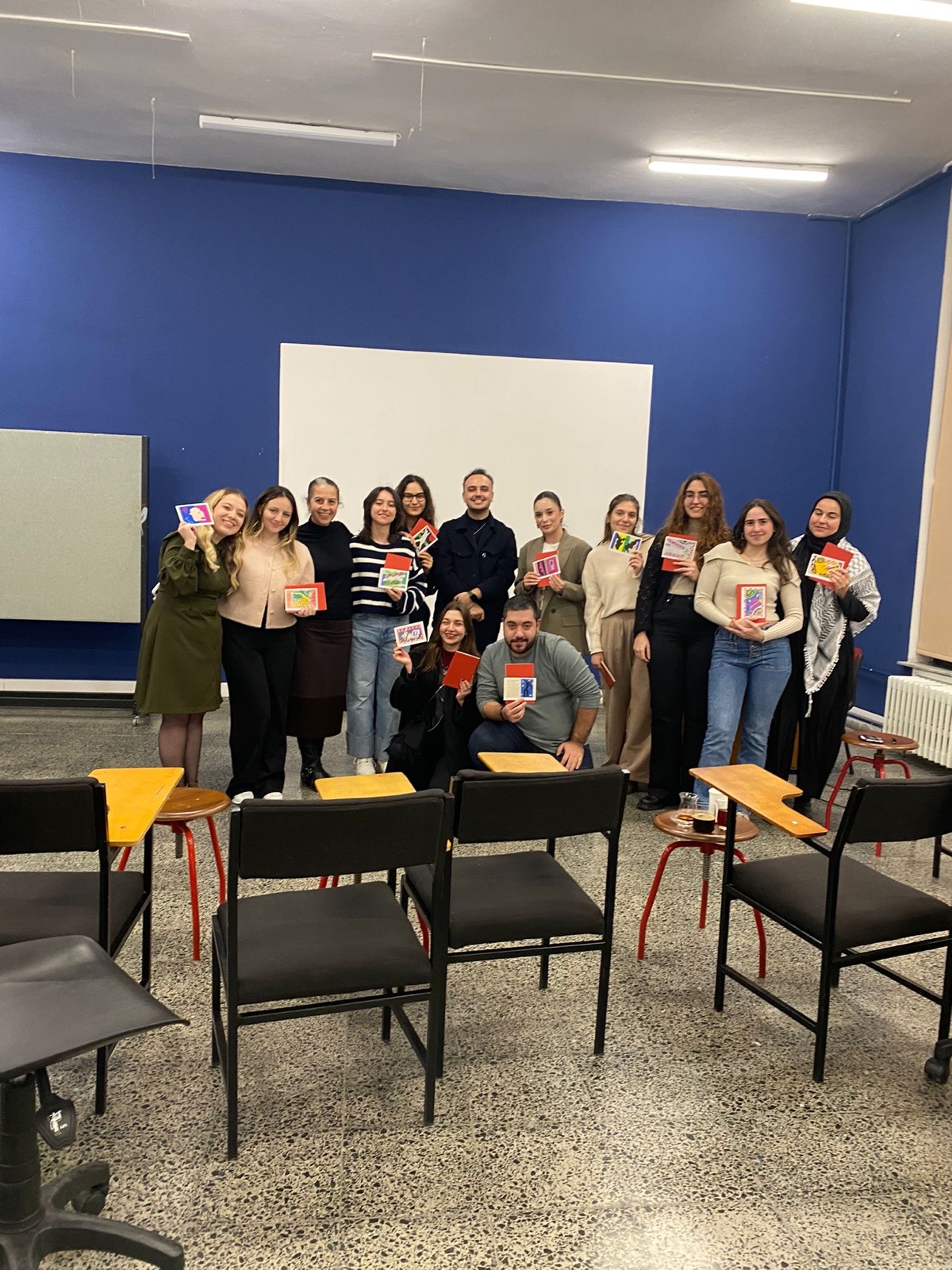
The LAUD 301 & 401 vertical urban design studio spent the Fall 2024 semester in Gaziantep, working under the theme of convergence. Twelve students developed individual urban design projects, and the semester's work was collected in three printed studio booklets.
- Students
- Duygu Alp, İsra Dora Çanak, Ece Dağalp, İlke Ezgi Ekici, Göknil Beyza Kelleroğlu, Almina Sıla Kuran, Oğulcan Parlakay, Cemile Ceren Sağatlı, Zeynep Esra Sarı, İrem Beray Taş, Eylül Türk, Öykü Çağla Yılmaz
- Instructors
- Hatice Karaca, Onur Tümtürk
- Booklets
- Access to booklets
The theme
Gaziantep is a city shaped by multiple urbanization processes. Historical centers, industrial zones, planned developments and spontaneous settlements sit side by side, each with its own spatial logic, formal character and social history. From the dense historical fabric around the castle to modernist housing estates, from traditional craft quarters to refugee-populated neighborhoods, these fragments often exist in isolation, producing sharp boundaries and missed opportunities for interaction.
The studio took this condition as its starting point and worked through the concept of convergence. Rather than unifying distinct pieces into a homogeneous whole, convergence was understood as a generative process: one that preserves the character of different urban fragments while creating vital interfaces between them. At these interfaces new hybrid conditions can emerge, differences become productive rather than divisive, and the city's diversity becomes its strength.
Our approach seeks not to erase differences but to make them productive, not to impose unity but to create opportunities for interaction, not to standardize the urban fabric but to enrich it through thoughtful design. Through this lens, Gaziantep's urban diversity becomes not a problem to solve but a resource to activate.
The process
The semester began with a rigorous collective analysis of Gaziantep's urban conditions through four analytical frameworks: urban form typology and environmental analysis, street pattern and accessibility analysis, water infrastructure heritage and hydrological analysis, and open space typology.
Building on this shared ground, each student developed an individual design approach addressing a specific condition of convergence in the city: new public spaces at the interfaces of different fragments, hybrid typologies mediating between urban patterns, landscape strategies reactivating the city's historical water infrastructure, and new programmatic mixtures that facilitate interaction while preserving distinct characters.
The outcome
Twelve individual projects were developed over the semester. The studio's work was brought together in three printed booklets: one dedicated to the collective analysis of the city and two collecting the design projects. These booklets mark the beginning of a regular publication practice that will document every studio from now on.
Student projects
Rebuilding the Interfaces
İlke Ezgi Ekici
Questioning Publicness in Gaziantep City Center
Zeynep Esra Sarı
Redesigning the Railway Scape
Öykü Çağla Yılmaz
Designing Socio-Ecologically Resilient Spaces
Duygu Alp
Chrono-Urbanism in Shaping Accessible Urban Futures
Cemile Ceren Sağatlı
Urban Weaving: Between Old and New
Almina Sıla Kuran
Crafting Urban Continuity
İsra Dora Çanak
Repairing Social and Ecological Flows
İrem Beray Taş
Revitalizing Urban Heritage
Ece Dağalp
Productive Integration
Eylül Türk
Stitching Urban Fabric
Oğulcan Parlakay
Living Mosaics of Gaziantep
Göknil Beyza Kelleroğlu